Pilates Isn’t About Doing More, It’s About Doing Better
One of the biggest misconceptions about Pilates is that it’s about how many exercises you do.
Joseph Pilates believed the opposite.
He taught that how you move matters more than how much you move.
That belief became the foundation of what we now call the 6 Principles of Pilates, guiding ideas that turn exercise into intelligent, purposeful movement.
Today, we’ll explore the first three:
- Control
- Concentration
- Centering
These aren’t abstract ideas.
They’re the reason Pilates feels different in your body, especially over time.
1. Control: Strength Without Tension
Joseph Pilates originally called his method Contrology, the study of controlled movement.
Control means:
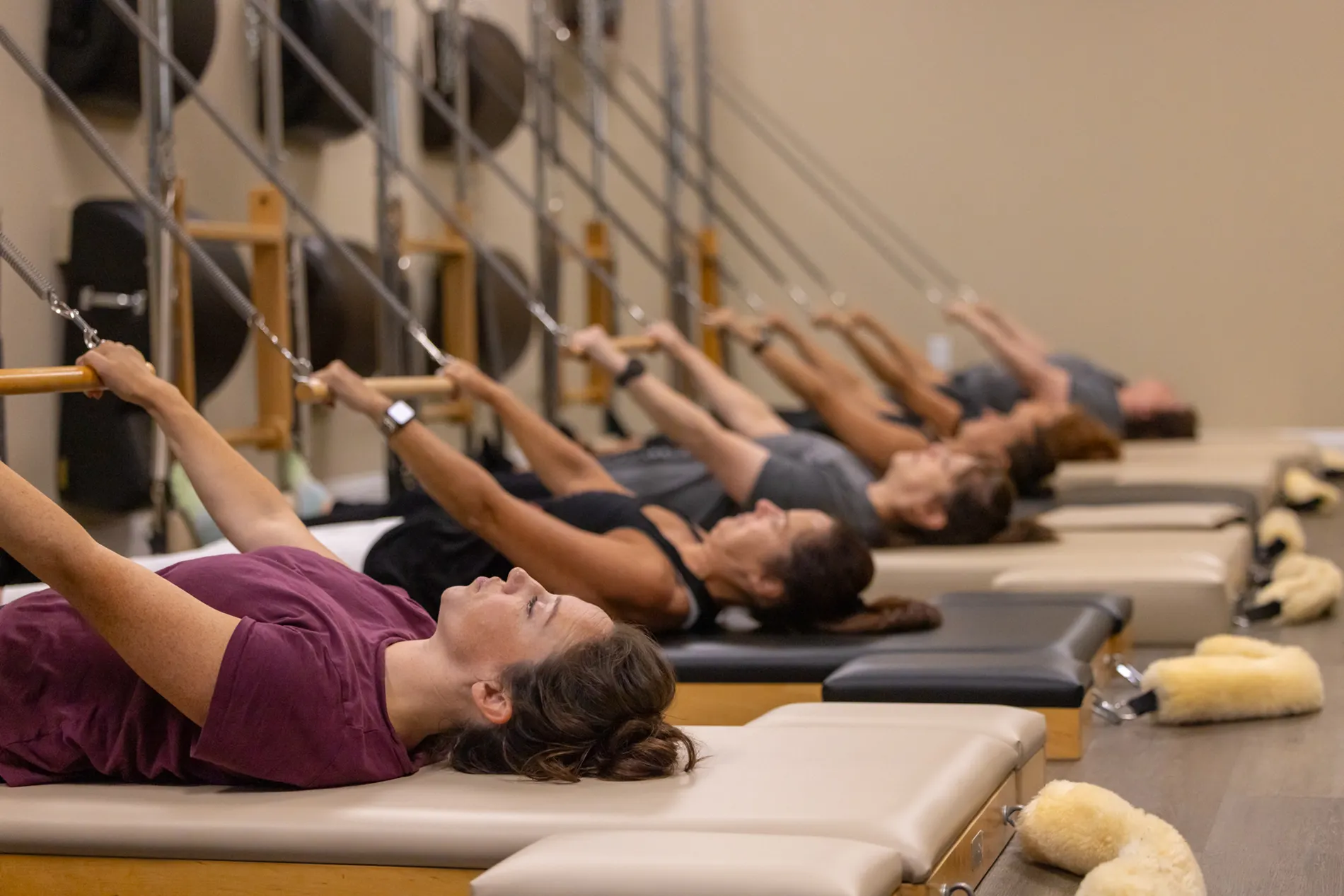
- Moving with intention
- Supporting joints instead of forcing them
- Staying present throughout the entire exercise
In a controlled movement:
- The spine is protected
- Muscles work together instead of competing
- Momentum doesn’t take over
Clients often notice this first as:
- Fewer “twinges” or flare-ups
- Greater stability
- A feeling of being held together rather than pulled apart
Control creates strength that feels safe.
2. Concentration: The Missing Link Between Exercise and Results
Pilates requires attention, and that’s a feature, not a flaw.
When you concentrate:
- Your brain and body communicate more clearly
- Small muscles wake up
- Movement patterns improve
This is why Pilates often feels mentally refreshing as well as physically strengthening.
Instead of zoning out, you’re tuning in:
- Where is my spine?
- What’s supporting me right now?
- Can I move with less effort?
Over time, this carries into daily life, better posture, easier walking, fewer aches at the end of the day.
3. Centering: Strength That Starts From Within
Centering refers to the center of the body, often called the powerhouse.
This includes:
- Abdominals
- Back muscles
- Hips
- Pelvic floor
But centering isn’t about gripping or flattening.
It’s about support, not stiffness.
When movement begins from the center:
- Arms and legs move more freely
- The spine stays stable
- Balance improves
Many clients are surprised to discover how much easier movement feels when they stop overusing their shoulders or lower back.
Centering teaches the body where support truly comes from.
Why These Principles Matter More As We Age
As the body changes, efficiency becomes essential.
The 6 Principles help:
- Reduce unnecessary strain
- Protect vulnerable joints
- Build strength without compression
Instead of pushing harder, Pilates teaches you to move more intelligently.
That’s why it’s so effective for long-term health, not just short-term fitness.
Coming Next: Precision, Breath & Flow
In Part 2, we’ll explore the final three principles:
- Precision
- Breath
- Flow
These complete the system, and explain why Pilates feels smooth, connected, and surprisingly energizing.